




入れ子のクリニック
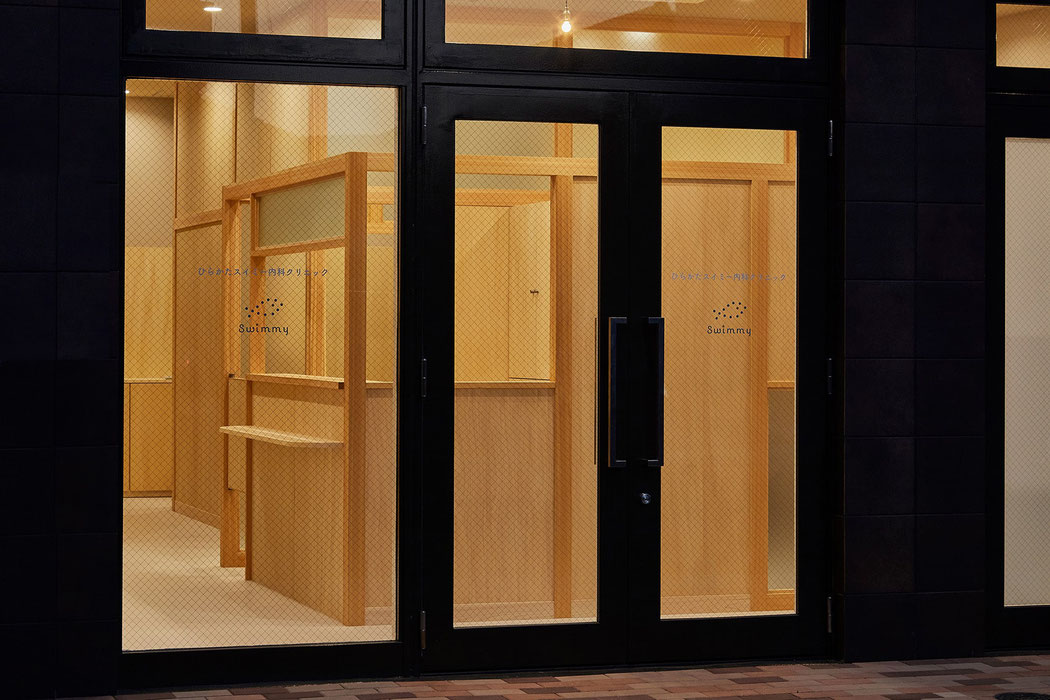
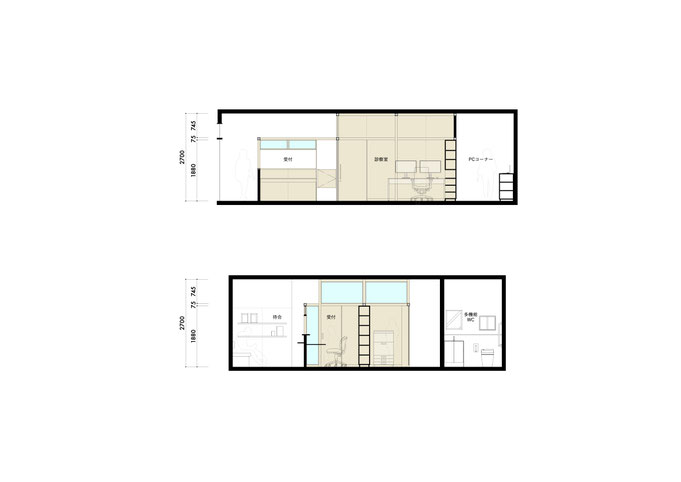
本計画は、22坪のテナント空間に計画した内科クリニックのインテリアデザインである。限られた床面積の中でも、患者と医師の双方が無理なく動けるよう、空間全体をゆるやかに回遊できる動線構成とした。診察室を平面の中心に据えることで、自然と入れ子状の構成が立ち上がり、コンパクトでありながら秩序ある空間が生まれている。中心に配置した「入れ子」は、75角のヒノキフレームによって形づくられている。落ち着いた小屋に入るような、ほどよいスケール感と親しみやすさをもたらす存在である。このフレームに面材やカーテン、家具を寄り添わせることで、各スペースは必要な独立性を保ちながらも、全体としてはやわらかく連続する体験をつくり出している。物理的な面積以上に、視覚的な抜けや安心感を感じられる構成を意図した。仕上げには、温もりと清潔感を併せ持つ木材を採用し、一部の壁には半透明のポリカーボネート板を用いることで、自然光が空間の奥まで届くようにしている。やわらかな光が全体を包み込み、患者だけでなく医療スタッフにとっても心地よい環境となるよう配慮した。また、フレームに取り付けたカーテンや家具は可動性を持たせ、運営形態の変化や医療体制の更新にも柔軟に対応できる構成としている。変化する要素と、軸となるフレームとを重ね合わせながら、地域とともに育っていくクリニックを目指した。
設計:Corred Design Office
施工:ヤマゲン工務店
所在地:大阪府
主要用途:内科クリニック
規模:既存建物内の内装改修
テナント床面積:66㎡
竣工:2024年
写真:新山源一郎
Nested Clinic
This project is an interior design for an internal medicine clinic within a 22-square-meter tenant space. Despite the limited floor area, the plan introduces a gently circulating layout that allows both patients and doctors to move comfortably and intuitively. By positioning the examination room at the center of the plan, a nested spatial composition naturally emerges, creating an organized and coherent interior within a compact footprint. At the heart of the clinic is a “nested” structure formed by 75 mm square hinoki (Japanese cypress) frames. This central element evokes the intimate scale of entering a small hut, offering a sense of familiarity and calm. Panels, curtains, and furniture are gently integrated into the frame, allowing each area to maintain an appropriate level of privacy while remaining softly connected as a whole. The configuration is designed to provide visual openness and a sense of reassurance that extends beyond the physical dimensions of the space. Warm and clean wooden finishes are employed throughout the interior, while semi-transparent polycarbonate panels are introduced in selected areas to bring natural light deep into the space. Soft, diffused daylight fills the clinic, creating a comfortable environment not only for patients but also for medical staff. Curtains and furniture attached to the frame are designed to be easily reconfigured, enabling the clinic to adapt flexibly to changes in operation or medical systems. By layering adaptable elements with a stable structural frame, the clinic is envisioned as a place that grows and evolves together with its community.