
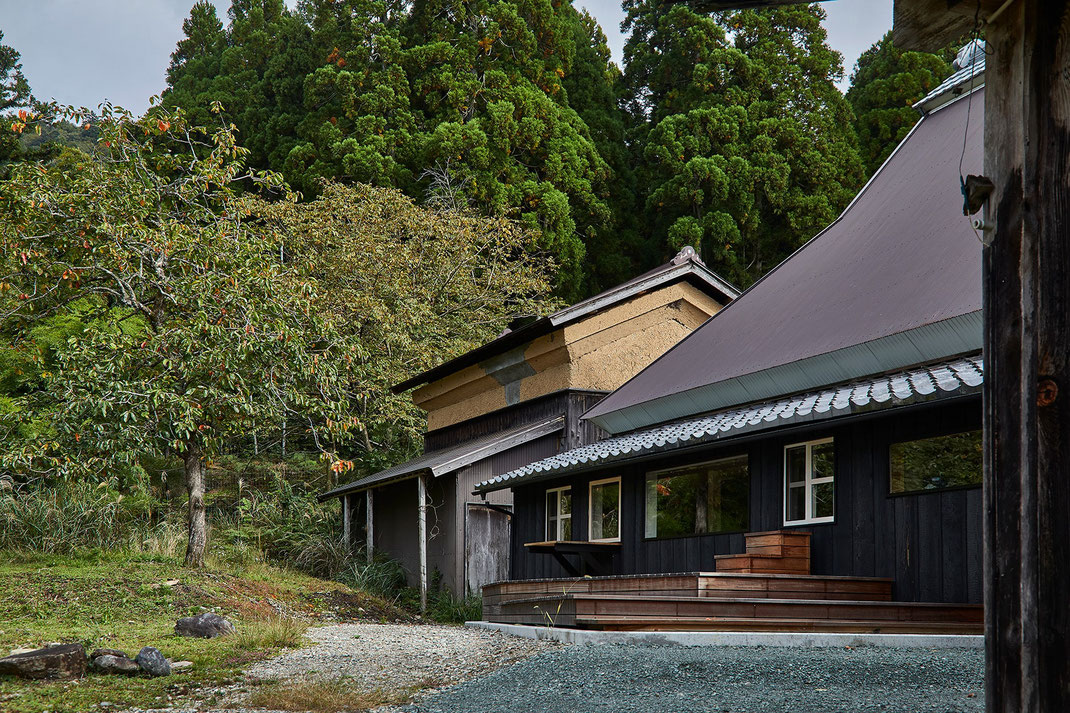





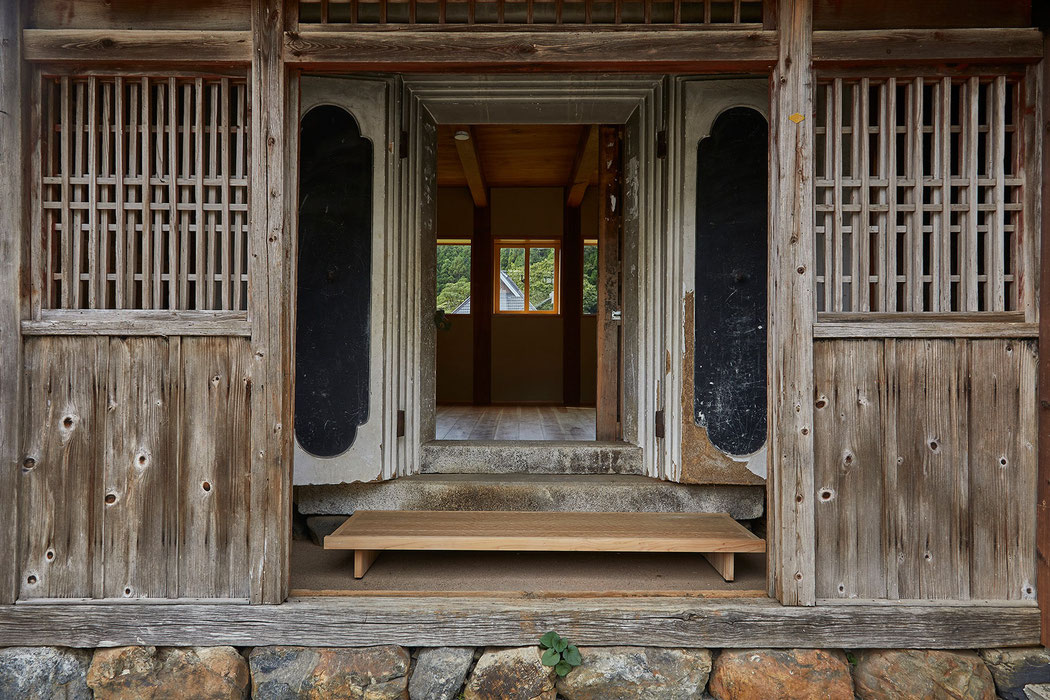


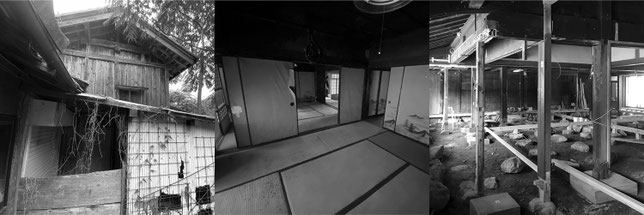
左)改修前の外部 中)改修前の内部 右)床下改修の様子
窓辺の家
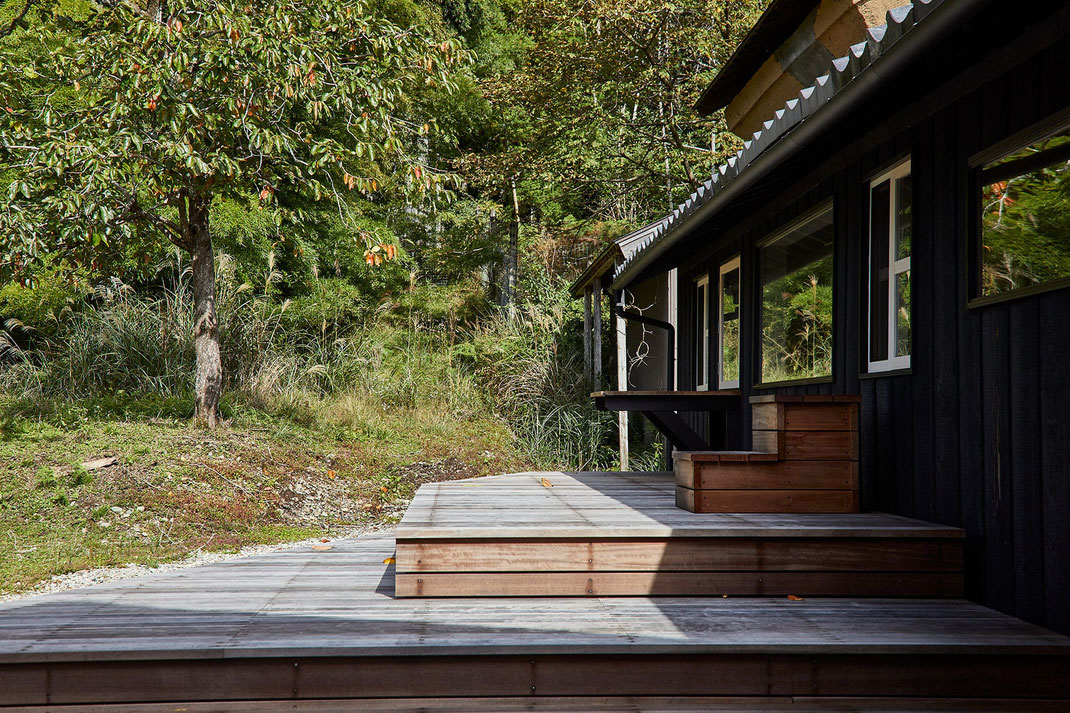
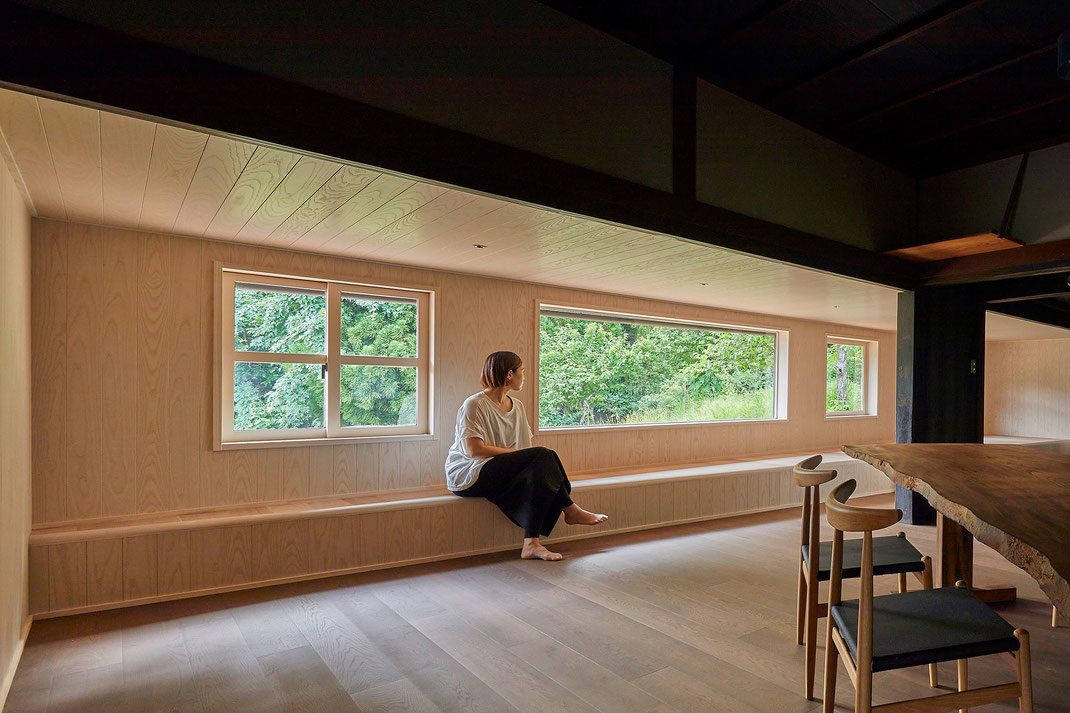
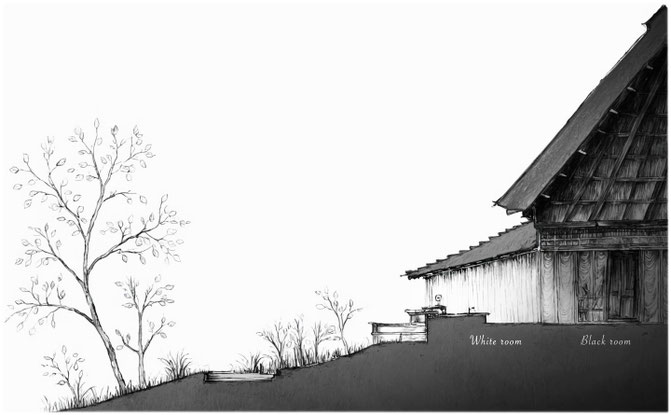
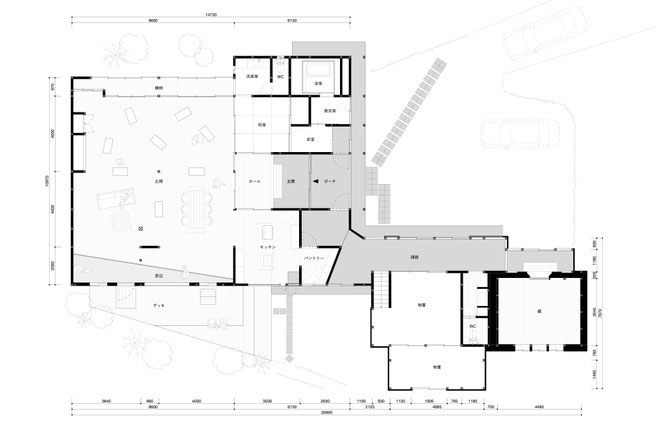
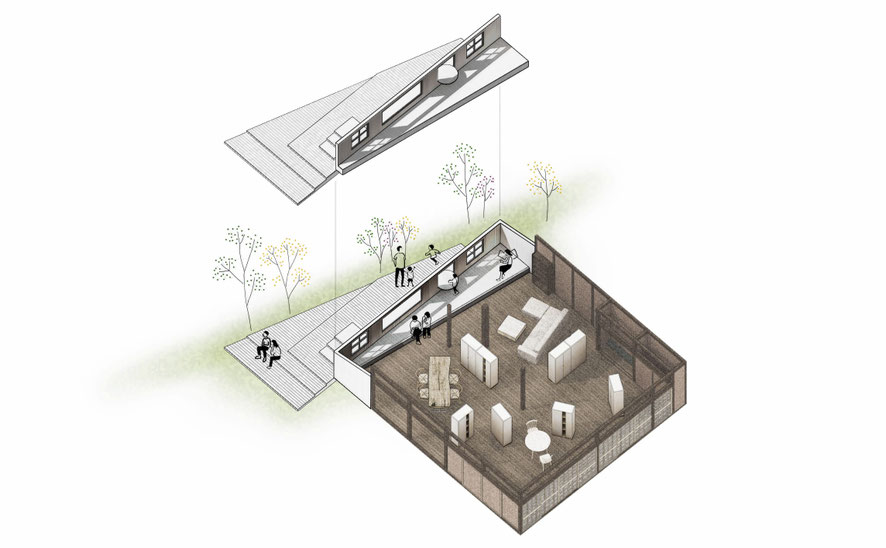
滋賀県高島市に残る古民家の改修計画である。この地域には、合掌屋根とそれを囲う「下屋(げや)」をもつ古民家が点在し、雪の多い冬の暮らしの知恵として風景に溶け込んでいる。本計画の古民家もその1つである。しかし、近年は積雪量が年々減少し、空間に求められる役割も変わりつつある。本計画では、この古民家を民泊・別荘として再生した。焦点を当てたのは、下屋に面した窓辺の空間である。既存の古民家では、雪対策として家の周囲が波板で囲われ、外部とのつながりは希薄になっていた。また現地調査から、こうした「雪囲い」が近年撤去が進んでいることも分かった。そこで私たちは、この境界をあらためて風景へとひらき、光を導く中間領域として再構成した。窓辺には白く染めた地域産の木材を用い、石庭のように光を建物の奥へと導き入れている。やわらかい反射光が、漆黒の広間に静かな陰影をつくり出す。建物中央部は壁を取り払い、ひとつながりの広間とした。その中に「タンスの間仕切り」を挿入することで、可変的なゾーニングを可能にしている。この間仕切りは可動式で、既存建物の歪みにとらわれずに設置でき、収納としての機能も兼ねている。あわせて断熱性能の向上と床暖房を導入し、冬季の快適性にも配慮した。離れの蔵には、三つの正方形の開口を新たに穿ち、最小限の操作で外光を引き込んでいる。風土に根ざした建築を、現代の暮らしへとひらき直す試みである。住み継がれてきた時間に寄り添いながら、この土地らしさをそっとすくい上げるような改修を心がけた。
設計:CORRED
施工:中尾工業
構造:木造
規模:地上2階
竣工:2025年
写真:新山源一郎
Window-Side House
This project is the renovation of a traditional farmhouse over one hundred years old located in Takashima City, Shiga Prefecture, a region known for heavy snowfall where farmhouses with steep
gabled roofs and lower lean-to structures (Geya) have historically
embodied practical wisdom for winter life and become an integral part of the regional landscape, although in recent years snowfall has gradually decreased and the roles and forms expected of
houses have begun to change; the farmhouse is renovated for use as a private lodging and vacation home, with a particular focus on the window-side space beneath the lean-to roof, which had
previously been enclosed with corrugated panels for snow protection, weakening the relationship between interior and exterior, while field research revealed
that such “snow enclosures” are increasingly being removed, prompting the boundary to be reopened toward the surrounding landscape and reconfigured as an intermediate zone that draws light into
the interior; white-stained locally sourced timber is used around the windows to guide light deep inside like a stone garden, where soft reflected light creates subtle shadows within the dark
central hall, the center of the house is opened by removing interior walls to form a continuous space, movable “tansu partitions” are introduced to allow flexible zoning while also functioning as
storage and accommodating existing distortions, thermal insulation is improved and floor heating is added for winter comfort, and in the detached storehouse three square openings are newly cut to
introduce natural light through minimal intervention.